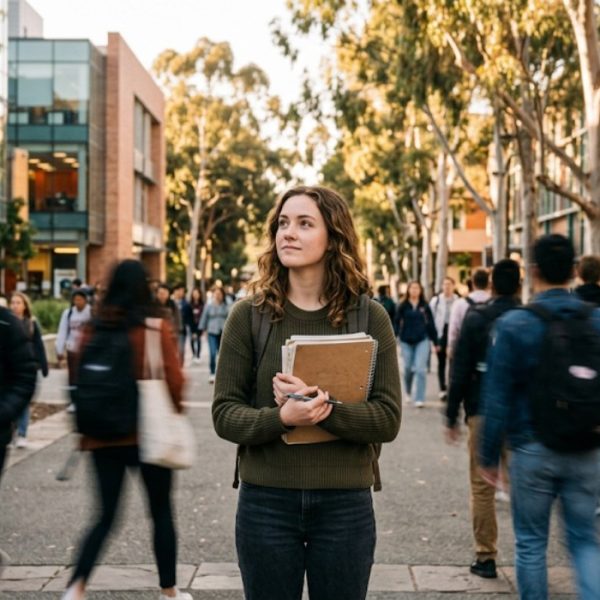
Ask a group of students who have recently arrived in Australia what the hardest part of the first semester was, and very few will say the coursework. They will talk about not knowing when to speak in a tutorial, about jokes landing strangely, about a supermarket with forty kinds of bread and none of the one they wanted. That gap between arriving and belonging has a name. What is culture shock, in practical terms, is less a single moment of surprise and more a long adjustment that runs quietly underneath everything else a student is trying to do.
A definition worth being precise about
The term was popularised by the anthropologist Kalervo Oberg in the 1950s to describe the disorientation people feel when the familiar cues of daily life stop working. Not the big differences, which everyone expects, but the small ones: how close people stand, when a conversation is over, whether disagreement is rude.
Researchers now usually treat culture shock as one visible part of a wider process of acculturation, the long adaptation that happens when someone lives inside a culture rather than visiting it. That framing matters, because it turns a personal failing into a predictable stage that almost everyone passes through.
The four stages, and why they are not a straight line
The classic model runs honeymoon, crisis, adjustment, adaptation. The first weeks feel exciting or at least novel. Then the accumulated small frictions become exhausting, and irritation or homesickness sets in. Gradually routines form, the language of the place becomes usable, and eventually the new environment stops requiring constant effort.
In reality almost nobody moves through those stages neatly. Progress loops back. A student can feel settled in October and completely undone in March by a family birthday they could not attend. This is normal, and saying so out loud helps more than most support programs realise.
What it looks like day to day
Culture shock examples in a university setting are rarely dramatic. A student who understands English well but cannot follow a tutorial because three people talk over each other. Someone who works twice as long on an essay because academic writing conventions were never taught, only assumed. A student who stops attending a class after being told, kindly, that they should participate more, and hears it as criticism rather than encouragement.
Physical signs are common too. Tiredness that sleep does not fix, headaches, appetite changes and difficulty concentrating are all well documented during periods of intensive adjustment. They tend to ease as the environment becomes predictable.
Why the experience is different for people from a refugee background
Students who arrive as refugees carry an additional weight that an exchange student does not. The move was not chosen, return is often not possible, and family members may still be in danger elsewhere. Language learning happens at the same time as resettlement, legal processes and, frequently, paid work.
None of this makes adjustment impossible, and treating these students only as vulnerable does them no favours. Many arrive with multilingualism, resilience and a very clear sense of what university is for. What helps is recognising that the same stage of adjustment can take longer and arrive later, and that a student who seems to be coping in first semester may need more support in second.
What actually helps
Three things come up consistently in the research and in student accounts. The first is explicit information. Tell people how tutorials work, what an academic asks for when they say critical analysis, how to book a study appointment. Culture is mostly unwritten rules, and writing a few of them down removes an enormous amount of friction.
The stages of culture shock are usually described as something that happens to a student passively. Structured volunteering in switzerland interrupts that passivity, replacing the isolating middle phase with a fixed commitment and a set of colleagues who expect you. Students who do this report a shorter and much less severe adjustment.
Culture shock is largely the experience of discovering that familiar institutions work on unfamiliar assumptions. Students abroad meet it constantly. Few things illustrate it faster than an unfamiliar electoral system, where even the ballot paper assumes knowledge nobody explains.
The second is a small number of real relationships. One classmate who will answer a text about an assignment does more than a whole orientation week. Structured peer mentoring works because it manufactures that relationship rather than hoping for it.
The third is time in the language outside the classroom. Formal English study builds accuracy, but confidence comes from ordinary conversation where mistakes cost nothing. Understanding how cultural customs around the world differ from one another is part of that learning too, because it reframes the differences as information rather than as personal error.
What returning home can do
Reverse culture shock deserves a mention, because it catches people by surprise. Students who visit family after a year or two abroad often find that they no longer fit neatly in either place. The people at home have carried on without them, and habits picked up overseas suddenly look strange. It usually settles, but knowing it exists takes away the fear that something has gone wrong.
Choosing where to go, when there is a choice
Not everyone has one. For students who do, the destination shapes the adjustment as much as the course does. Language of instruction, size of the diaspora community, cost of living and the amount of support a university actually funds all matter. Anyone weighing up the best places to study abroad should look past rankings and ask what the first three months will feel like on the ground.
The part nobody says enough
Adjustment is not a test of character. It is what happens when a person learns an entire operating system for daily life while also studying, working and often supporting relatives. Students who understand that tend to be kinder to themselves, ask for help earlier and finish their degrees. That is the whole point of talking about culture shock at all.